Computers today are incredibly fast and compact, and are used for many purposes. But it all started with simple devices that let people perform calculations more easily. It's incredible how those mechanical devices became fully electronic machines over the course of the past centuries.
Pre-Computing devices
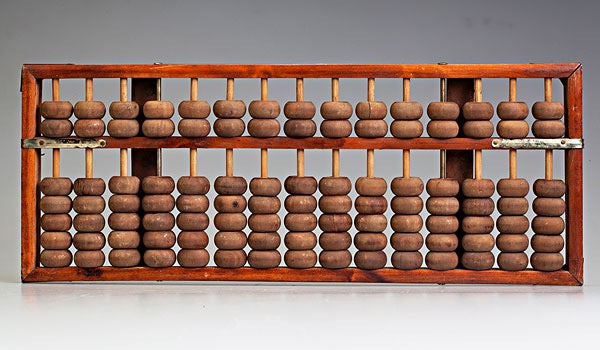
1)Abacus :
One of the oldest tools used for calculations. Mainly used across Asia and Europe. It consists of beads on rods that represent numbers, allowing people to perform addition, subtraction, multiplication and division more efficiently.
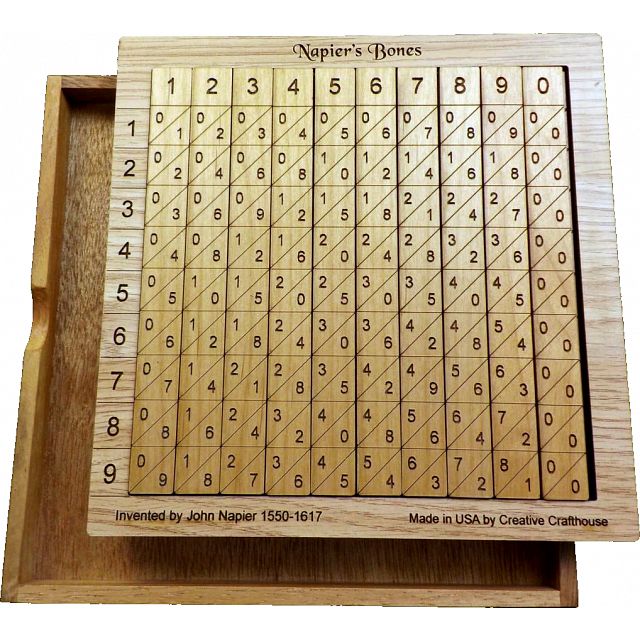
2)Napier's Bones :
This tool was invented by John Napier in the early 17th century. It simplified multiplication and division using a system of repeated addition. And it was incredibly easy to use and helped people perform complex calculations faster.
Analog Computing devices
3)Slide Rule :
This was developed in the 17th century and was widely used by Engineers and Scientists until the 1970s before digital calculators became popular. The Slide Rule is a mechanical analog device not only for multiplication and division but also for roots, logarithms and trigonometry. It relies on sliding scales and it is based on the principle of logarithms, making calculations faster and more precise.
Mechanical Computers
4)Pascaline :
This tool was created by Blaise Pascal in 1642. It could automatically add and subtract using a system of gears and wheels, hence the start of mechanical computing devices. But it was not a huge commercial success due to how expensive it was and how hard it was to repair.
5)Leibniz Calculator :
Leibniz calculator (a.k.a. Stepped Reckoner) was invented by the German scientist Gottfried Wilhelm Leibniz around 1673. This was the first mechanical calculator that could do not just adding and subtraction but also multiplication and division. The machine performed multiplication by repeated addition and division by repeated subtraction. The device used a stepped drum mechanism, which was a significant innovation at that time.
Programmable Mechanical Devices
6)Jacquard loom
The Jacquard loom is a mechanical loom, invented by Joseph Marie Jacquard in the early 1800s. It was used to automate the weaving of complex patterns using punched cards to control individual warp threads. Although this is not a computer, at least in the modern sense, this introduced the concept of programmable instructions, influencing future designs of computers.
6) Analytical Engine
The Analytical engine was Charles Babbage's design for a mechanical general purpose computer. He started designing this around 1833. It featured a processing unit (mill), memory (store) and punched cards for programming. It was never fully finished due to funding issues and its complexity.
Electromechanical Computers
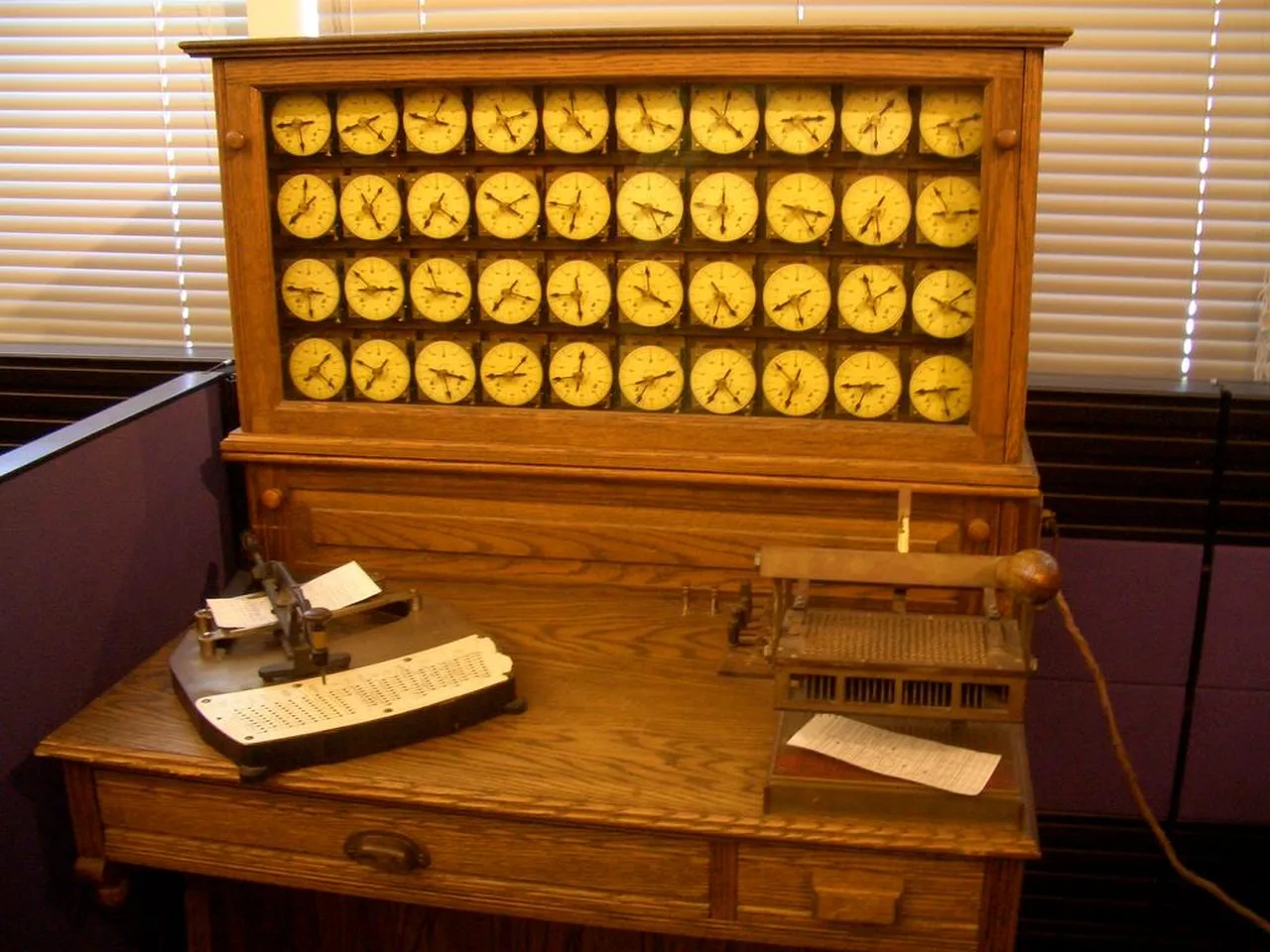
7)Hollerith Machine:
Hollerith (Tabulating) machine was developed by Herman Hollerith. It was an electromechanical device that used punched cards to automate data processing. It was famously used for the 1890 US census. It worked by electrically reading holes in cards, summing data and sorting them. This was the foundation for IBM.
8) Mark 1
Mark 1 (IBM Automatic Sequence Controlled Calculator) was one of the first large scale, general purpose computers. It was developed at Harvard university by Howard Aiken and built by IBM. It was used during world war two for calculations. It weighed five tons and was over 50 feet long. And it contained 750000 parts.
Electronic Digital Computers
9)ENIAC :
ENIAC (Electronic Numerical Integrator And Computer) was the first programmable, general purpose electronic digital computer. It was built during world war two to help the U.S. military. It was developed by John W. Mauchly and J. Presper Eckert at the university of Pennsylvania. This machine used vacuum tubes and weighed over 30 tons. But it could also perform thousands of calculations per second.
From the abacus to ENIAC to modern computers we use today, it's incredible how far things have evolved. Understanding these devices helps us understand how far technology has evolved and how it continues to evolve.

.jpg/500px-Keuffel_and_Esser-Model_4181-1_Log_log_Duplex_Decitrig_slide_rule-IMG_5821-white_(cropped).jpg)

Comments
Post a Comment